You know Botox. You may have heard Dysport is "faster." And lately Letybo keeps showing up on TikTok as the Korean option everyone is trying. We carry all three at our Leander and Georgetown studios, so we get asked to compare them every week.
Here is the honest version, built from each product's FDA label and from what we see in the treatment room, with no marketing claims dressed up as facts.
The short answer
Botox, Dysport and Letybo are all botulinum toxin type A. They work the same way: they block the signal that tells a muscle to contract, so the lines that muscle creates soften for a few months.
What separates them is who makes them, what the FDA has approved each one for, how each brand measures a unit, and small differences in how each one behaves in a given muscle. None of them is the best choice for everyone, and the right one for you depends on the area, your muscles and how you have responded before.
Botox vs Dysport vs Letybo at a glance
Everything in this table comes from each product's FDA prescribing information unless it says otherwise.
Botox: the most studied
Botox Cosmetic was the first neurotoxin approved for cosmetic use in the U.S., for frown lines in 2002. It has since been approved for crow's feet (2013), forehead lines (2017) and the vertical neck bands between the jaw and neck (2024), the most approved areas of the three.
Its label says the effect begins one to two days after treatment and builds through the first week, lasting about three to four months for frown lines. Because it has the longest track record, it is our default for most first-time patients.
Dysport: does it really spread more?
Dysport was approved for frown lines in 2009, and that remains its only approved cosmetic area in the U.S. You will read everywhere that it "spreads more" and "works faster." The evidence is more mixed than that.
Studies of spread disagree: one found Dysport's area of effect was larger at the dose ratio injectors usually use, while another found Botox spread wider when the same number of units was compared. Most of the difference seems to come down to dose and technique rather than the product itself. The U.S. Dysport label doesn't include an onset time, and the "faster" claim comes mostly from the brand's marketing.
In practice, some patients do find Dysport kicks in a little sooner or feels softer across a broad muscle, and that is a perfectly good reason to choose it. Dysport also contains lactose, so it is not for anyone with a cow's milk protein allergy.
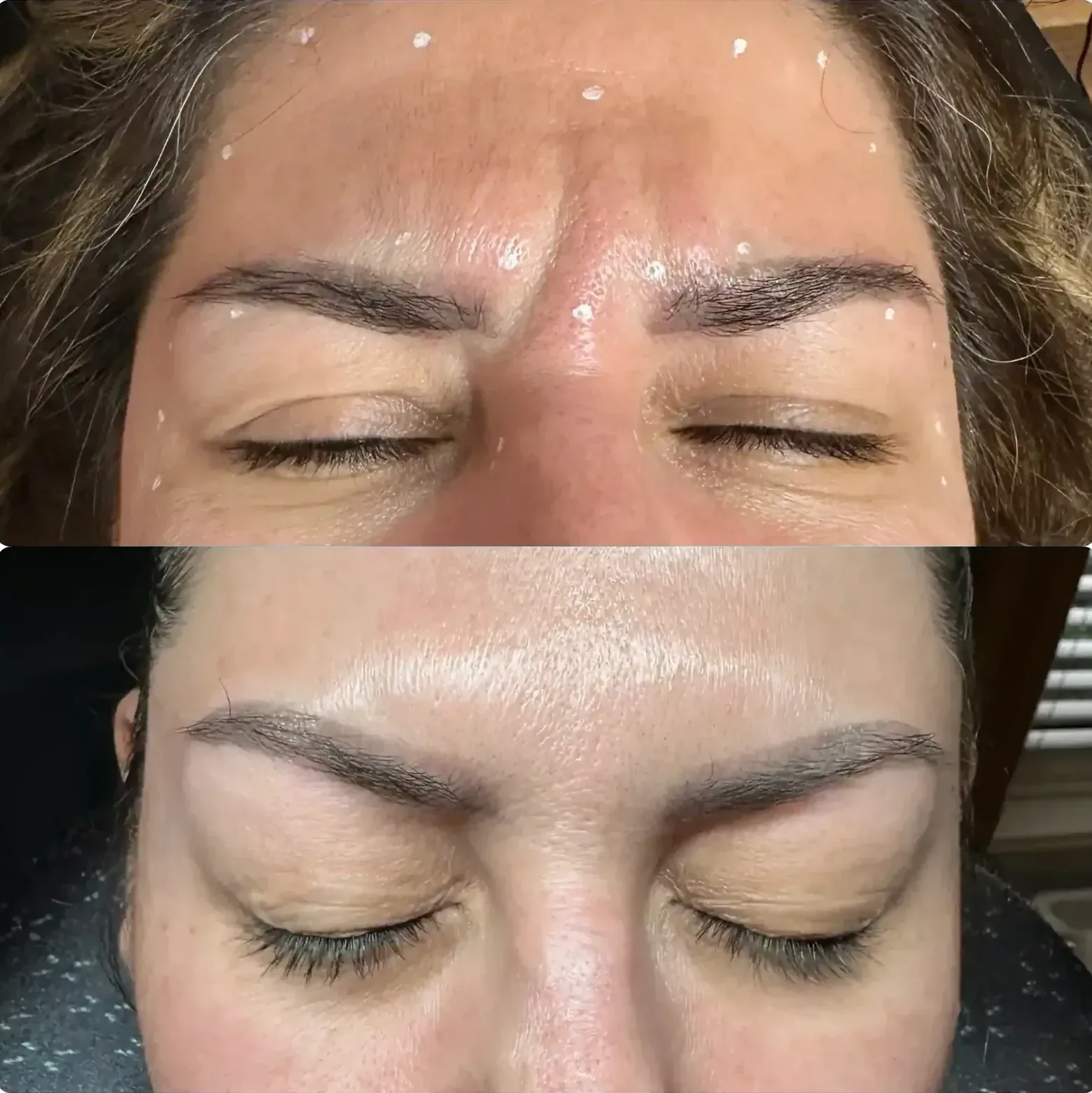
Frown lines before and after Dysport, treated by Kamryn at Contour & Sculpt
Letybo: the newest option, from Korea
Letybo is made by Hugel in South Korea, where Hugel reports it has been the country's best-selling neurotoxin for years. The FDA approved it on February 29, 2024 for frown lines between the brows, and it reached U.S. practices in 2025.
It is the same type of toxin as Botox and Dysport, with the same 20-unit frown-line dose as Botox on its label. Its label doesn't state how fast it works or how long it lasts; Hugel reports results lasting up to four months. Head-to-head studies have shown comparable wrinkle improvement with Letybo's active ingredient and Botox in the areas studied, so anyone telling you one is stronger, faster or longer-lasting is guessing.
What we can tell you is that we have had strong, clean results with it, and it gives patients one more good option.
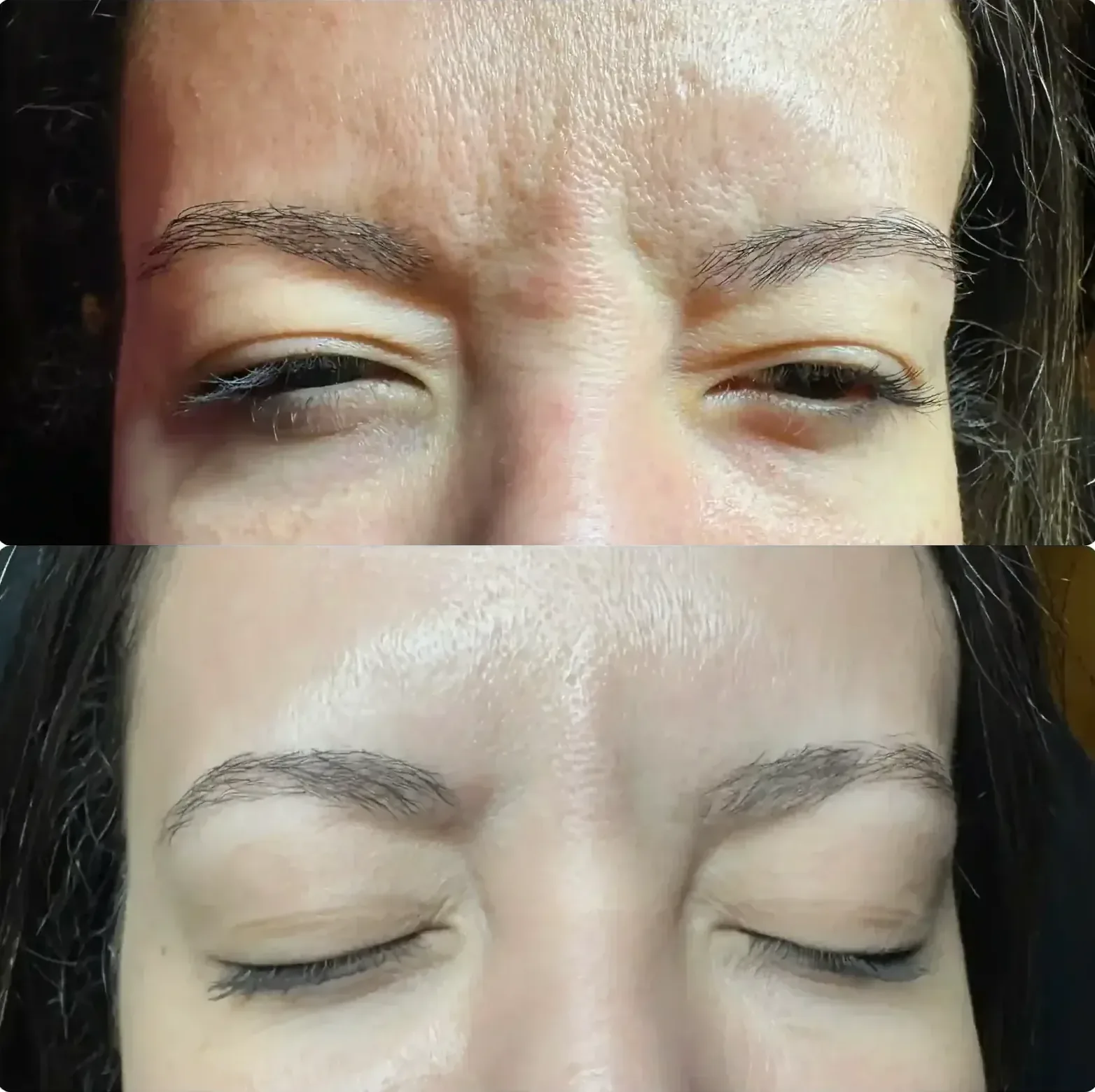
Frown lines before and after Letybo, treated by Kamryn at Contour & Sculpt
Curious about Letybo?
What it is, what to expect and the questions patients ask most, on our Letybo page.
Read About Letybo
Which one works faster? Which lasts longer?
On the labels, Botox is the only one that states an onset, one to two days. Botox lasts about three to four months for frown lines and Dysport up to four months. Letybo's label doesn't give a figure.
In real life, how fast you see results and how long they hold depends far more on your muscles, your dose and how regularly you are treated than on the brand. Most of our neurotoxin patients return every three to four months, and many stretch that interval over time as the treated muscles weaken.
Why the per-unit prices look so different
Dysport at $4 a unit looks like a bargain next to Botox at $12 and Letybo at $10. It isn't a fair comparison, because each brand measures its units differently. The labels say units can't be compared or converted between brands.
Look at the label doses for frown lines instead: 20 units of Botox, 50 units of Dysport, 20 units of Letybo. At those doses, a frown-line treatment works out to about $240 with Botox, $200 with Dysport and $200 with Letybo. Your own dose may be higher or lower; we give you the exact number before anything is drawn up.
Every consultation begins with listening. My goal is for you to look like yourself: refreshed, balanced, and confident.
How we choose between them
We start by watching your face move: where you hold tension, how strong each muscle is, and how the muscles balance against each other. Then we choose the product for the area and for you. Botox is our default for most first-time patients, Dysport can suit a broad, strong muscle, and Letybo is a good fit for patients who want to try the newest option or who haven't loved their results elsewhere.
Whichever we use, we start conservatively and see you at two weeks to check how your muscles responded. Under-treating is easy to correct at that visit; over-treating means waiting months for it to wear off.
Common questions
Can I switch from Botox to Dysport or Letybo?
Yes. Because units don't convert one-for-one, we treat a switch like a first visit: we map your face, start conservatively and check you at two weeks.
Is Letybo the same as Botox?
Both are botulinum toxin type A and work the same way, but they are separate products from different makers, approved separately by the FDA.
Which is best for crow's feet or the forehead?
Botox is the only one of the three FDA-approved for crow's feet and forehead lines. We will talk through the right product for each area at your consultation.
Are they safe?
All three are FDA-approved prescription medicines with a long safety record when given by a trained injector. Side effects can include headache and mild redness or bruising at the injection sites; a drooping eyelid or brow is uncommon. Like every botulinum toxin, all three carry a warning about the rare spread of effect beyond the injection area, which we review with you before treatment.
Not sure which one is right for you?
Book a complimentary consultation at our Leander or Georgetown studio. We will look at how your face moves and tell you honestly which product we would choose, and what it will cost.
Book a Consultation
Book your private consultation
Studios in Leander (200 Joes Cove) and Georgetown (402 W. University Ave) · Mon–Sat 9 AM–6 PM